Department of Civil Engineering
Indian Institute of Technology Palakkad was established in the academic year 2015-16 and Civil Engineering (CE) has been part of the institute since its inception. Over the years, the discipline has developed in terms of academics, research, laboratory development, R & D projects, industry collaboration and consultancies. The discipline integrates comprehensive areas including Building Materials and Construction Management, Environmental Engineering, Geotechnical Engineering, Transportation Engineering, Structural Engineering, and Water Resources Engineering. The academic programmes include B. Tech. in Civil Engineering, M. Tech. in Geotechnical Engineering, M.S. and Ph.D. M.Tech programs in other areas of Civil Engineering are being planned. Civil Engineering discipline in IIT Palakkad accentuates the intense realization of fundamental principles, emphasizes on expanding the analytical ability and develops the practical sense to deal with the real-life problems in Civil Engineering.
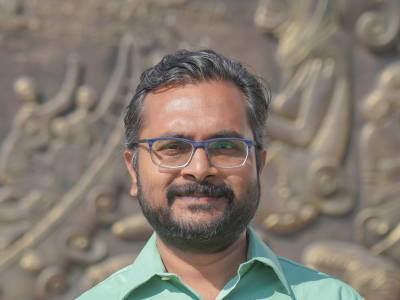
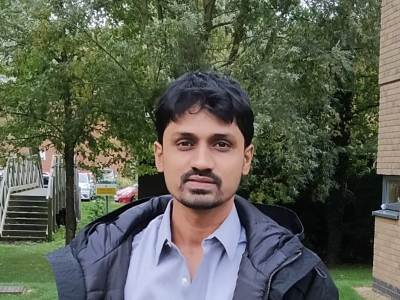
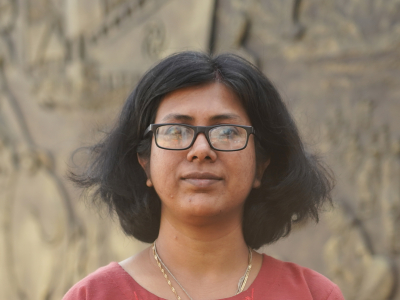
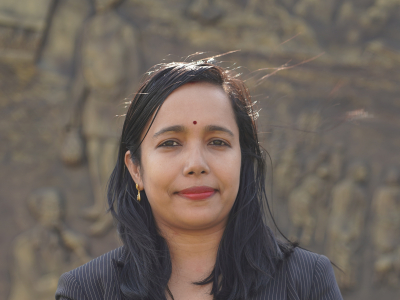
The faculty in Civil Engineering come with academic training from various reputed institutes in India and abroad. The diverse background of the faculty helps to bring in different perspectives to teaching and research to the students in Civil Engineering.
Programmes
B.Tech in Civil Engineering: Civil Engineering is one of the four B.Tech. disciplines that has been in existence in IIT Palakkad since it opened its doors in August 2015. The faculty in Civil Engineering have academic training from various reputed institutes in India and abroad. The diverse background of the faculty helps to bring in different perspectives to teaching and research to the students in Civil Engineering.
B. Tech. Civil Engg. - Curriculum
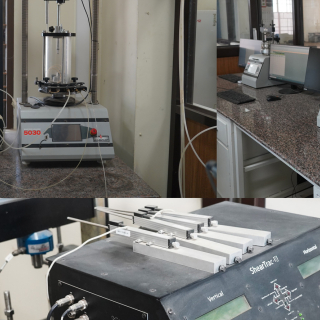
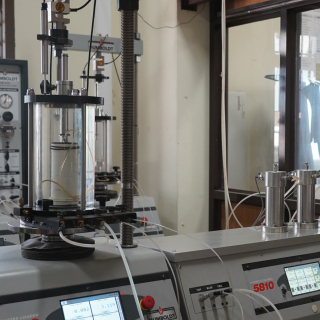
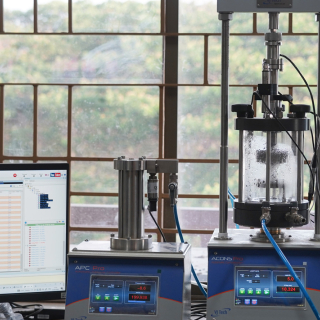
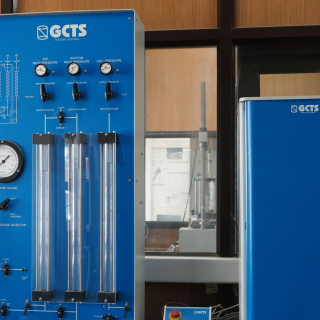
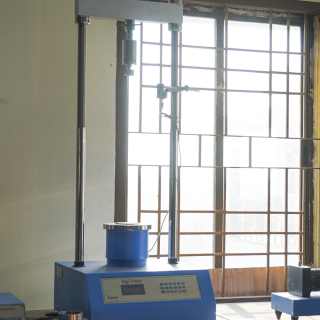
M.Tech in Geotechnical Engineering: The major objective of the program is to train and prepare students for a career in Geotechnical Engineering as per the current industrial needs. It is also intended that the program develops a passion and a firm base for research at the doctoral level (PhD). The program offers courses in various specialised areas of Geotechnical Engineering, such as soil mechanics, geotechnical investigation, foundation engineering, ground improvement techniques, environmental geotechnics, slope stabilisation, retaining structures, rock mechanics and underground structures, and soil dynamics to name a few. The Geotechnical Engineering laboratory is well equipped with all the basic equipment for the characterization of geomaterials and advanced testing equipment. The state-of-the art advanced testing equipment currently includes automated static and cyclic triaxial systems, computerised direct shear system, automated consolidation apparatus, computer-controlled flexible wall permeameter, large soil-geosynthetic interface resistance testing system, large pull out test set-up for geosynthetics, soil water characteristic curve (SWCC) apparatus, constant rate of strain (CRS) test equipment, rock triaxial test apparatus, rock creep testing equipment, split Hopkinson pressure bar (SPHB) etc. In addition, X-ray Diffractometer (XRD) and Scanning Electron Microscopy (SEM) are available in the Central Instrumentation Facility (CIF) of the Institute. Computational facilitates for conducting studies in geotechnical engineering include ABAQUS, PLAXIS 2D, PLAXIS 3D, ANSYS, GeoStudio 2018 (SLOPE/W, SEEP/W, SIGMA/W, QUAKE/W, TEMP/W), FLAC 2D, FLAC 3D, PFC3D, etc. for finite element and finite difference modelling of geotechnical problems, LPile, FB-Multipier, and FB-Deep (educational version) for individual and group analyses of deep foundation and MATLAB and other programming software packages.
M. Tech. Geotech. Engg. - Curriculum
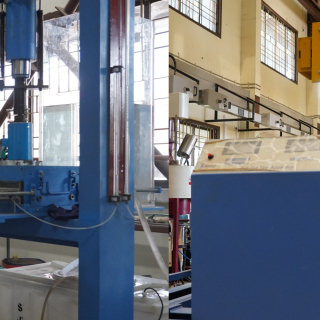
M.Tech in Structural Engineering: The M.Tech program in Structural Engineering is designed to To equip students with strong foundational technical knowledge to practice structural engineering as a career. To give hands-on training to analyze and design various structures, thus develop a strong sense of self-confidence to solve challenging problems. To expose and teach skills that are relevant to the structural engineering industry.The curriculum is designed such that there is a good mixture of core and elective subjects in structural engineering.In the first semester, Advanced Mechanics of Solids, Advanced Design of Metal Structures, Structural Dynamics and Finite Element Method in Structural Mechanics are the recommended core courses. The Advanced Structural Engineering Lab is also part of the second semester. The experiments in the lab are designed to give the students hands-on training to understand the behaviour of reinforced concrete and steel structural members, use of non- destructive testing methods, deformation and strain measurement techniques and other advanced concepts. The lab has an in-house designed 3D self-straining test frame with a vertical load capacity of 4000kN and horizontal capacity of 1000kN. The lab features equipment such as static and dynamic material testing systems with 500kN and 100kN servo-hydraulic test systems, Structural Actuators of Capacities 100kN, 250kN and 500kN, Load jacks of capacities 100kN, 1000kN & 2000kN, UTM of Capacity 2000kN, Digital Image Correlation System, Rebound Hammer, Shakers, bi-axial testing machines, 5 kN MTS actuator with high frequency range, data acquisition systems, LVDTs, strain gauges etc. The lab houses an overhead crane of capacity 5 tons. The institute has state-of-the-art High-Performance Computing Clusters (HPCs) ‘that are available to the students, research scholars, staff, and faculty. Further students will be having access to most of the industry standard commercial packages such as ABAQUS, ANSYS, SAP2000, ETAB, STAAD Pro., Opensees etc. These tools allow students to perform structural analysis and simulations that reflect real-world engineering practices, ensuring they are jobready upon graduation. The students will be exposed to the use of different programming languages like MATLAB, PYTHON, C++, FORTRAN etc which help them to develop their own computational algorithms to solve the real-world problems.
M. Tech. Structural. Engg. - Curriculum
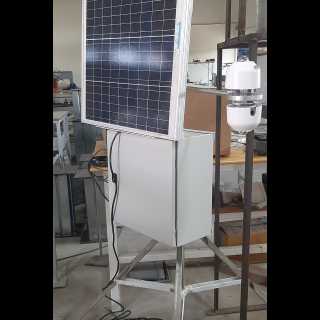
M.Tech in Water Resources Engineering: The M.Tech specialization in Water Resources Engineering at IIT Palakkad is committed to educating, training, and equipping the current generation of engineers to tackle future water-related challenges. As the challenges posed by global warming and climate change strain the natural water cycle, effective water resource management becomes ever more urgent. The Water Resources Engineering curriculum is structured to include a well-balanced mix of core and elective courses with exposure and knowledge in theory, modeling and practice. Key components of the program will cover understanding of advanced hydrologic and hydraulic principles, design of water conveyance systems and resilient hydraulic infrastructures, including dams, barrages, and levees. The program is designed to train students to address key challenges in water resources engineering, including but not limited to flood forecasting, climate change impact assessment, policy development for enhancing national water and food security, and the design of climate-resilient hydraulic structures. In the second year of the two-year program, students will undertake a project in their chosen area of interest within the broader field of water resources engineering. The projects are designed to address real-world challenges and will involve elements of experimentation, simulation and modeling, and the application of data science in water resources management. Graduates will have the option to pursue higher studies and build a career in academia or R&D labs, or enter the industry by working with consulting firms, design firms, contractors, or government agencies, gaining a balanced mix of office and on-site experience. The institute features state-of-the-art High-Performance Computing Clusters (HPCs) available to the students, research scholars, and faculty. The water resources engineering laboratory is equipped with basic and advanced equipment essential to conduct postgraduate experiments. The state of the art computational facilities include softwares such as ArcGIS, ERDAS for geospatial data analysis, and hydrologic models such as MIKE, SWAT. Below are a few facilities available at the water resources engineering laboratory.
M. Tech. Water resources. Engg. - Curriculum
M.S. (by Research): The different areas in which the research programs are offered include Structural Engineering, Geotechnical Engineering, Water Resources Engineering, Building Materials, Construction Management, Transportation Engineering and Environmental Engineering.a postgraduate research-oriented programme intended for students who aspire to acquire advanced knowledge and practical research experience in the field of civil engineering. The programme is designed to promote independent and original research, enabling students to address complex engineering problems. Under the guidance of experienced faculty members, students undertake in-depth research in their chosen area.
Ph.D: The programme provides an opportunity for candidates to pursue advanced research in specialised areas of civil engineering, addressing complex theoretical and practical problems related to infrastructure, sustainability, environmental protection, and technological advancement. Under the guidance of experienced faculty supervisors, doctoral scholars undertake in-depth and independent research, leading to the development of new knowledge, methodologies, or applications. The programme emphasises rigorous research planning, critical analysis, and sy
Teaching Labs
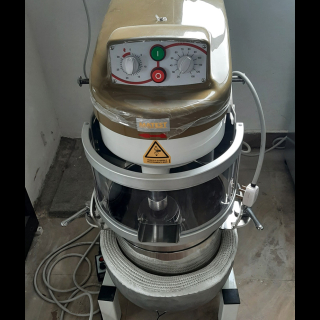
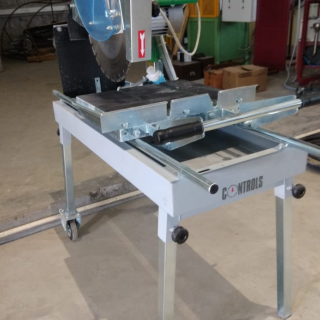
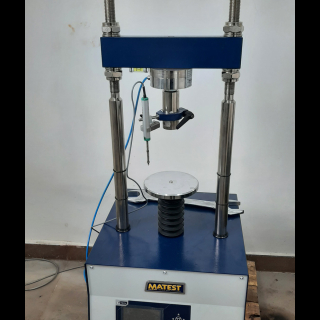
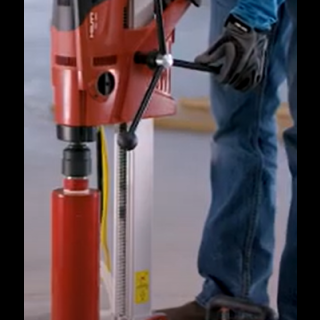
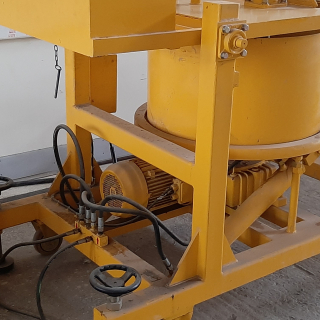
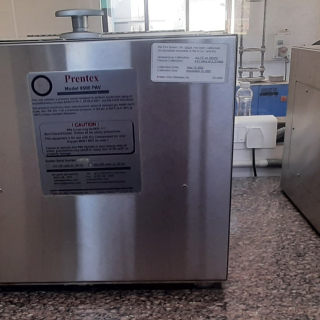
Large Infrastructure Testing Laboratory, Construction Material Testing Laboratory, Advanced Geotechnical Engineering Laboratory, Environmental Engineering Laboratory, Transportation Systems Laboratory, Water Resources Engineering Laboratory